











NEWS: Chatbots.org survey on 3000 US and UK consumers shows it is time for chatbot integration in customer service!read more..
 | by Erwin van Lun on 16 years, 10 months ago in Business News |
Summary: Scientists Worry Machines May Outsmart Man - should there be limits on researching human like computers?
 A robot that can open doors and find electrical outlets to recharge itself. Computer viruses that no one can stop. Predator drones, which, though still controlled remotely by humans, come close to a machine that can kill autonomously.
| by Erwin van Lun on 16 years, 11 months ago in Chatbots.org news, Chatbots.org News |
Summary: Awards for chatbots: Loebner, Chatterbox Challenge, Machine Intelligence, who knows more?

As you probably know, the Turing Test is a proposal for a test of a machine’s ability to demonstrate intelligence. The test celebrates its 100th birthday in 2012.
The most prestigious prize based on the Turing test, is obviously the Loebner Prize, started in 1990 by Hugh Loebner (who’s still passionate about chatbots).
The Loebner Prize however, is not the only prize in this area. There seem to be a few more prizes to win in the field of creating artificial intelligent and conversational life. For Chatbots.org we’re trying to create a list of all of them (and to list all the results on the site).
| by Erwin van Lun on 17 years ago in Agent's Processing, Action tendency, Business News |
Summary: Finally Evidence of Language Influencing Thought, but Inuit don't have 100 words for snow
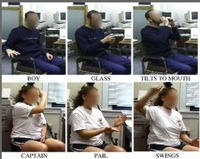 The 19th century Sapir-Whorf hypothesis, that ideas inherent in human languages might influence or limit human thought, has spawned a wide range of claims, some little more than urban legend; like the claim that the Inuit have hundreds of words for snow (they don’t, Inuit has a half-dozen words for snow, that’s fewer than English, and there’s no evidence they think differently about snow than we do). In the 1960s researchers began to formulate tests of the hypothesis and learned language was more universal than relative, leading them to largely abandon the hypothesis. In recent years, though, advances in cognitive science have made it possible to spot experimental differences that might have been missed before. So is there any real evidence now that language influences thought? A new Edge article by Lera Boroditsky say yes. Boroditsky researches cognitive science and symbolic systems - thought and language. She claims to have found solid evidence in Pormpuraaw, an Aboriginal community in Australia.
| by Erwin van Lun on 17 years ago in Machine Intelligence Competition, Award News |
Summary: Closing date for entries for the 8th British Computer Society Machine Intelligence Competition: create a smart chatbot!
 Rollo Carpenter and David Burden have braved BCS’s Machine Intelligence competition in the past. Details now in for this year’s competition:
8th British Computer Society Machine Intelligence Competition
Wednesday December 16th 2009 at Peterhouse College, Cambridge, UK, during the annual SGAI conference AI-2009
Closing Date for Entries: October 1st 2009
| by Erwin van Lun on 17 years, 2 months ago in Agent's Expression, Speech synthesis (TTS), Agent's Processing, Emotion, Action tendency, Business, Patents, Business News |
Summary: Nav.System that simulates emotion when reading out directions and detects the emotion of the driver
 Ford has filed a patent called “Emotive Text-to-Speech System and Method” describing a system that can not only simulate emotion when reading out directions and describing traffic problems, but could also detect the emotion of the operator of the car and interact with them in ways designed to, oh, soothe a little road rage. The avatar is said to “appear to become frustrated” if the driver is a lead-foot, and may say “Your driving is hurting my fuel efficiency.” Or, if a driver is going too fast, the dash-bound assistant could turn blue, ask what’s wrong, and suggest a more direct route to their destination.


